

The Dreams That Endure in “A Raisin in the Sun”
November 18, 2026
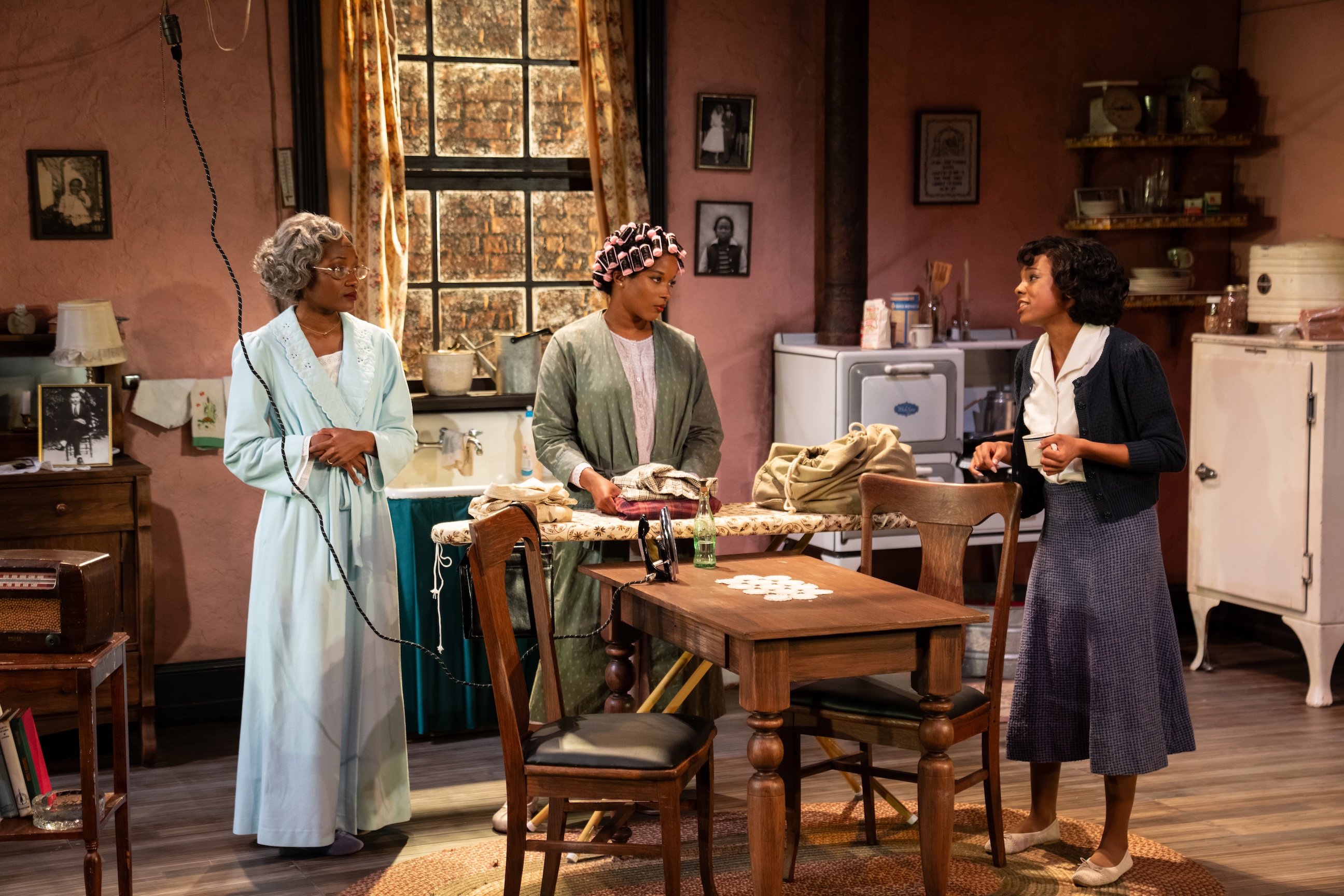
Director KenYatta Rogers discusses Lorraine Hansberry’s landmark drama and the student artistry behind TDPS’ production.
More than 65 years after its Broadway debut, Lorraine Hansberry’s “A Raisin in the Sun” remains one of American theater’s most celebrated plays, exploring the dreams, struggles and aspirations of a Black family living in segregated Chicago.
This November, the School of Theatre, Dance, and Performance Studies (TDPS) brings the landmark drama to The Clarice Smith Performing Arts Center, with undergraduate actors and graduate student designers collaborating to tell the Younger family’s story.
When it premiered in 1959, the play made history: Hansberry became the first Black woman to have a play produced on Broadway, and Lloyd Richards became the first Black director of a Broadway play. The production went on to win the New York Drama Critics’ Circle Award for Best Play and receive four Tony nominations.
Director KenYatta Rogers, associate professor of theatre and director of undergraduate studies, discussed what makes Hansberry’s storytelling so powerful, how TDPS students are interpreting the play through their designs and what the cast and creative team are learning.
How did “A Raisin in the Sun” find its way into this TDPS season?
Our play selection process is open to students and faculty. A student suggested that we produce “A Raisin in the Sun,” and I sponsored it for our faculty’s consideration. That suggestion became a shared undertaking. Before we had a set, costume or rehearsal schedule, we had a student saying this story matters and that we should be the ones to tell it.
What makes Lorraine Hansberry’s storytelling, and the Younger family at the center of the play, so powerful?
Hansberry is a storyteller’s storyteller. Her story construction is meticulous. The emotional consequences of each scene run headlong into the scenes that follow. She curates the many musical selections in the play, each advancing conversations about longing and belonging, identity and heritage. Her dialogue dances between humor and injury with precision and wit. She plants Easter eggs for us to find, but it isn’t until the play’s conclusion that we realize the power of those little revelations.
And her characters are funny, proud, exhausted, ambitious, contradictory people. Hansberry embraces their full humanity. They share an address but not necessarily a single definition of a better life or a way to live it. Within that diversity is their strength. Hansberry brings us into the intimate conversations and conflicts of this Black family living on the South Side of Chicago in the early 1950s, giving us characters whose specificity is essential to the art of the storytelling.
How are the student designers bringing the world of the Younger family to life?
The Youngers live in this apartment as a result of redlining, a discriminatory practice that denied Black families access to housing and financial services. The Younger household is a place where this family — despite the worn carpets, peeling plaster and cramped confines — has made a life.
Our scenic designer, MFA student Bridgette Tran, translates those ideas into architecture. Her research on the historical practice of chopping up apartments into smaller units called kitchenettes, providing lower-income families half the space for the same rent, led her to create a space that turns the Younger household into a pressure cooker in one scene and a nurturing garden in another.
Our costume designer, MFA student Johnna Presby, tells a story through fabric, color and style that allows us to read each character’s relationship to work, generation, aspiration and identity. Each costume carries the history of what a person can afford, what they preserve and how they want to be seen by the world.
Light also serves as a metaphor for the characters’ emotional journeys. Our lighting designer, MFA student Yannick Godts, shapes our experience of time, intimacy and dreams dreamt and deferred using electric light and “sunlight.”
These MFA designers are interpreting Hansberry alongside our undergraduate actors. Their research provides us insight into how language, culture and access take shape in a theatrical world.
What has been unique about this rehearsal process?
For this production, we have a Deaf actor in our understudy cast and we have collaborated closely with Michelle Banks, our production’s director of artistic sign language, in support of our actor.
As artistic director of Visionaries of the Creative Arts, a Deaf-led performing arts organization in Washington, D.C., Michelle has been teaching our performers, stage management team, assistant director and me about Deaf culture, American Sign Language and Black American Sign Language.
Her work asks us to become more attentive storytellers and to consider where and how attention travels, how understanding happens and what assumptions we bring into a room.
“A Raisin in the Sun” runs November 18, 19 and 21 at The Clarice Smith Performing Arts Center. Tickets are sold out, but you can join the waitlist by contacting the Ticket Office at tickets-theclarice@umd.edu or (301) 405-ARTS.